
.webp)
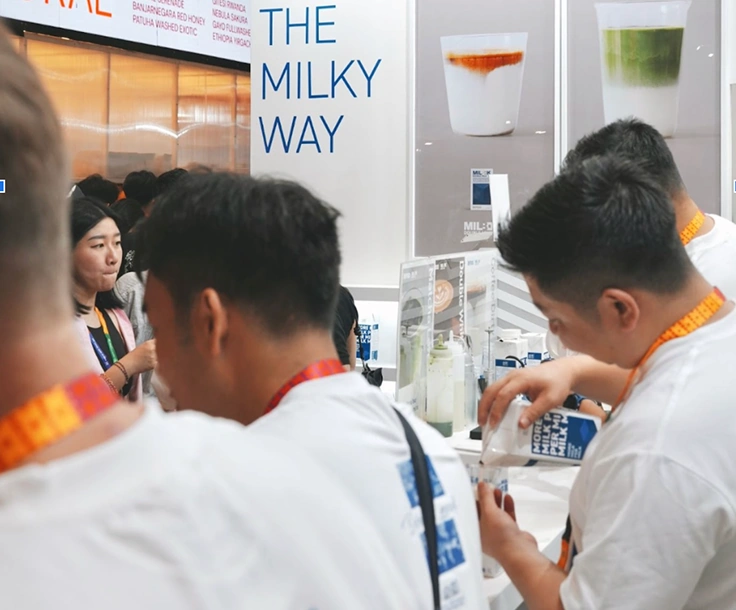
World of Coffee Brussels 2026 was an important moment for BEFOOD. Held from June 25 to June 27 at Brussels Expo, it was the first edition of the event ever hosted in Belgium — and the largest World of Coffee ever held in Europe, closing with more than 14,400 attendees from 142 countries and 445 exhibiting companies.
For Brussels we changed the usual format of a supplier stand. Instead of presenting the milk on its own, we invited three European specialty roasteries to pour with us: Manhattan Coffee Roasters from Rotterdam, TANAT from Paris, and Five Ways Coffee Roasters from Amsterdam. Each of them prepared roast profiles specifically for milk — coffees intended to be drunk with dairy rather than despite it — and their names went on the banner above the bar next to ours.
.webp)
The coffees served at the booth were:
Between them the five lots covered a wide span, from dense caramel and dark chocolate sweetness to sharp florals and red fruit. That range was the point: broad enough that any weakness in the milk would show up somewhere across it.
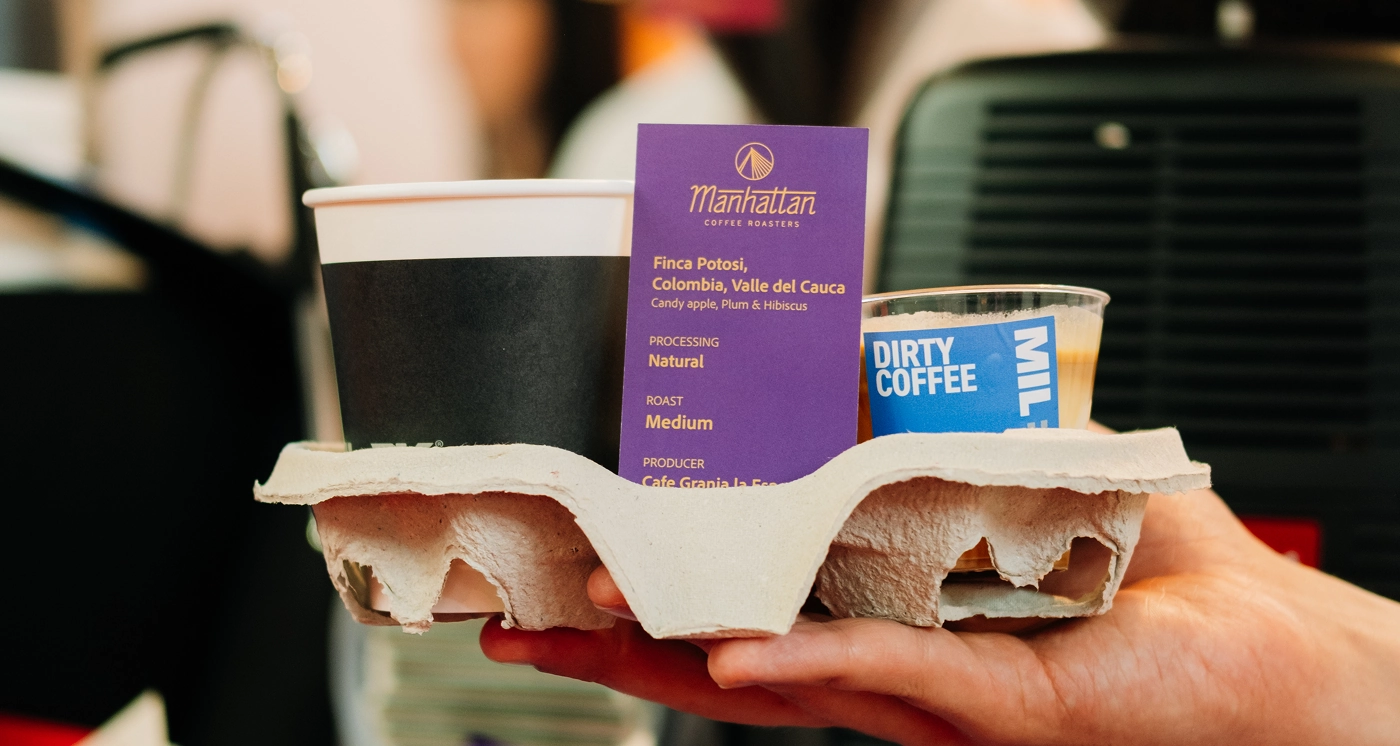
We poured the lineup as two drinks, Dirty Coffee and Flat Double White, because they ask opposite things of a milk.
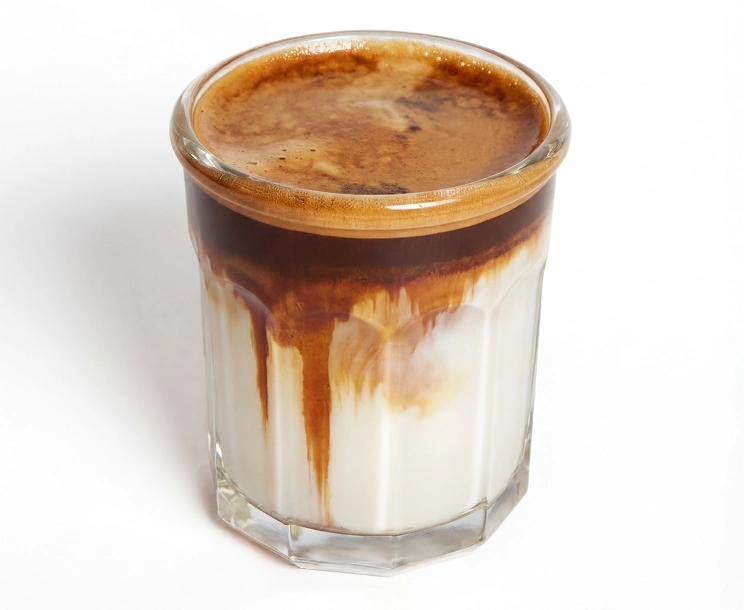
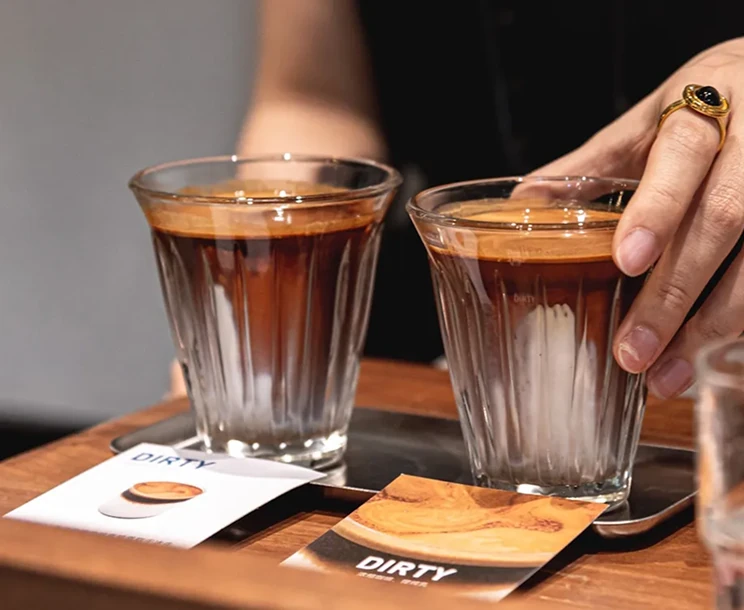
Dirty Coffee is the more demanding of the two. Hot espresso is poured over cold MILBOK Double Milk and the two are never mixed, so the drink is tasted in layers — the espresso reaches you first at full intensity, and the milk follows a moment later. Nothing softens the coffee on the way. Bright, fruit-forward lots gain the most in this format: the blueberry and floral side of Dambi Udo, and the raspberry and hibiscus of Santa Teresa, both stayed defined once the milk came through instead of blurring into sweetness. A milk with a pronounced taste of its own would round those notes off. Double Milk adds cold, creamy weight underneath the espresso and leaves the top of the profile alone.
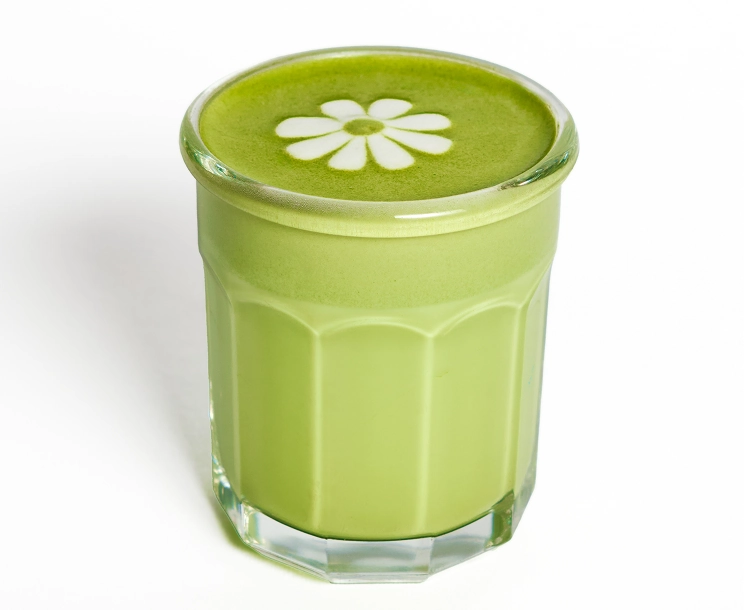
Flat Double White works the other way round. The milk is steamed and the espresso is folded into it, producing one continuous flavour rather than two layers, and the coffee has to survive that merge — softening into the drink without losing its identity by the finish. Denser, sweeter lots carried this format best: the caramel and dark chocolate of the TANAT honey lot, and the plum and candy apple of Manhattan's natural Potosí, both still readable through the milk. Double Milk contributes body and a stable, silky microfoam, and its natural sweetness supports those notes rather than sitting on top of them.
Across the two drinks the same milk is asked to do opposite jobs: stay out of the way in one, hold everything together in the other. Double Milk is designed for exactly that — texture, natural sweetness, and batch-to-batch consistency, with no flavour of its own to impose on the coffee.
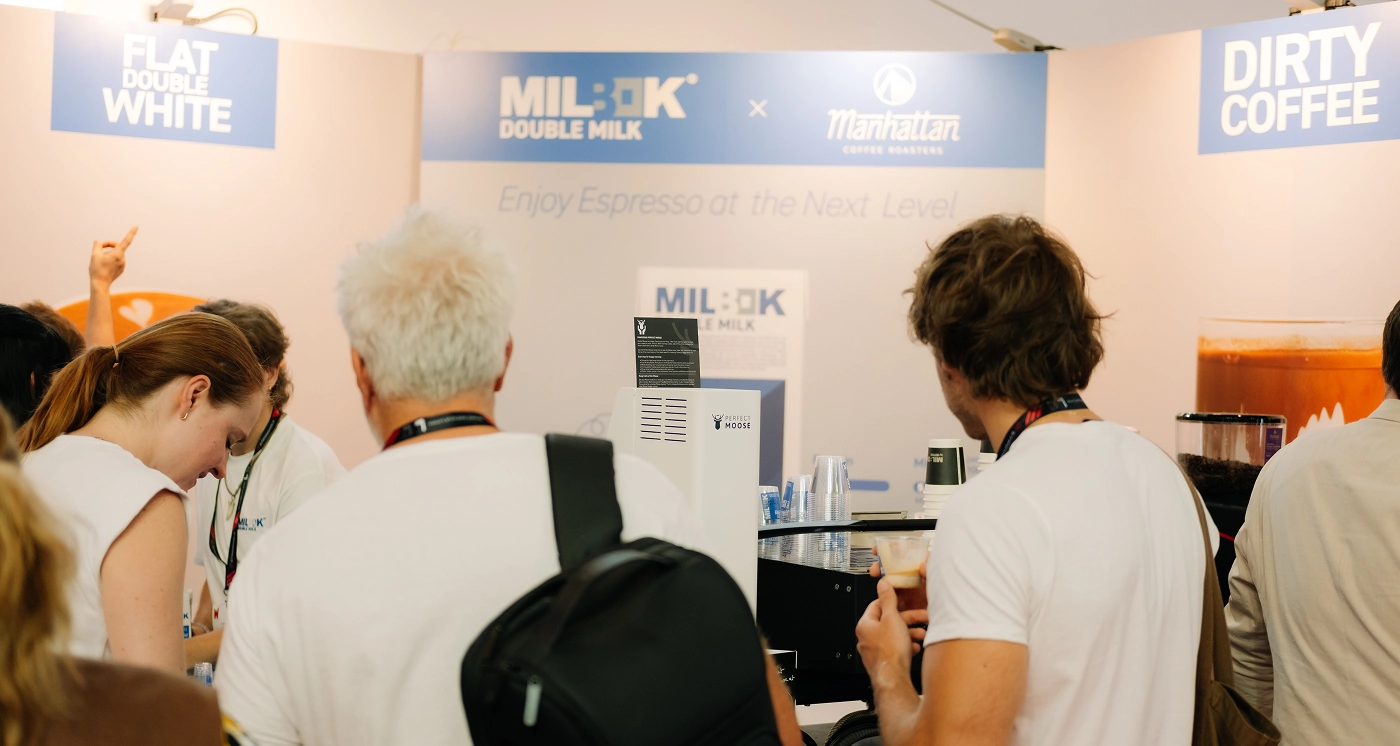
Brussels also showed how far the European market has moved. Three roasteries from three countries spending three days on a dairy stand, each with profiles developed for milk, reflects a change in how the ingredient is treated: milk is now part of the recipe rather than a fixed default. As cafés across Europe build menus around signature drinks and repeatable quality, that shift is only accelerating — and it is the environment MILBOK Double Milk was built for.
Related links:



.webp)
.webp)
.webp)
.webp)
.webp)
.webp)